The marketing industry is no longer just evolving; it is accelerating. What once took years of gradual change now happens in months, driven by rapid advancements in artificial intelligence. In this environment, AI powered agencies have emerged as the clear leaders, redefining how businesses approach growth, visibility, and customer engagement.
In 2026, companies expect more than basic digital marketing services. They want faster execution, better targeting, and measurable results. Traditional agency models, which often rely on manual processes and slower turnaround times, struggle to keep up with these demands. AI-powered agencies, however, are built for speed and precision.
These agencies leverage AI to process large volumes of data, automate repetitive tasks, and continuously optimize campaigns. This means marketing strategies are no longer static; they evolve in real time based on performance and user behavior. The result is a more adaptive, efficient, and results-driven approach to digital marketing.
At the same time, success in this new landscape isn’t about replacing humans entirely. The most effective agencies understand that AI enhances human capability rather than eliminating it. Strategy, creativity, and brand positioning still require human insight. The winning formula lies in combining intelligent automation with experienced decision-making.
Businesses exploring modern, scalable marketing solutions often turn to JH SEO Agency, which focuses on SEO, content marketing, and performance-driven strategies aligned with the demands of an AI-driven future.
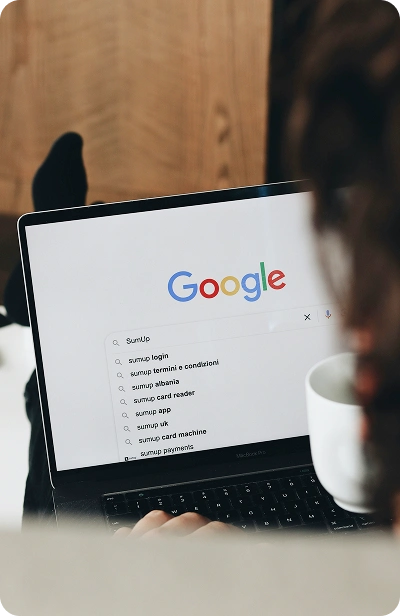
Google Search Generative Experience (SGE) / AI Overviews
One of the biggest advantages of AI-powered agencies is their ability to streamline and automate workflows that were once time-consuming and resource-heavy. This shift allows marketing teams to operate more efficiently while delivering better results.
AI is now handling many core marketing functions, including:
- Keyword research and clustering based on real-time search data
- Content drafting using tools like ChatGPT and Jasper
- Automated ad campaign adjustments based on performance metrics
- Data analysis and reporting without manual input
These capabilities significantly reduce the time required to launch and manage campaigns. What used to take days can now be completed in hours, allowing businesses to respond quickly to market changes and opportunities.
Another key benefit is consistency. AI systems do not get fatigued or overlook details. They can continuously monitor campaigns, identify trends, and make real-time adjustments, leading to more stable, predictable performance.
At the same time, JH SEO Agency combines AI-driven marketing systems with experienced human strategy to ensure campaigns stay aligned with business goals, resulting in more consistent performance, stronger optimization, and long-term growth.
However, while AI excels at execution, it does not replace the need for human expertise.
There are several critical areas where human involvement remains essential:
- Brand voice and identity: AI can mimic tone, but it cannot fully understand what makes a brand unique
- Creative storytelling: Emotional connection and originality still come from human creativity
- Strategic planning: Long-term decisions require context, experience, and business insight
- Client communication: Building trust and understanding goals requires human interaction
For example, an AI tool might generate a technically sound blog post, but a human is needed to refine it into something that truly resonates with the target audience. Similarly, while AI can optimize ad spend, it cannot fully understand the broader business strategy behind a campaign.
This is why the most successful AI powered agencies adopt a hybrid approach. They use AI to handle repetitive and data-driven tasks while relying on human expertise for strategy, creativity, and relationship management.
AI Content Creation Tools Compared: Which One Actually Ranks on Google?
As AI content tools become more widely used, businesses often ask a critical question: which tools actually produce content that ranks on Google?
There are several leading platforms in this space, each with its own strengths:
- ChatGPT is widely used for long-form content such as blog articles, guides, and informational pages
- Jasper is designed for marketing-focused content, including ads, landing pages, and email campaigns
- Other AI writing tools support niche use cases such as product descriptions or social media content
While these tools can generate content quickly, ranking on Google depends on more than just the tool itself.
High-performing content typically includes:
- Clear alignment with user search intent
- Logical structure with well-organized headings
- In-depth information that provides real value
- Proper keyword integration without over-optimization
AI can produce a strong starting point, but it often lacks the depth and specificity required for top rankings. This is why human editing is crucial. Refining AI-generated content ensures it is accurate, engaging, and aligned with SEO best practices.
Another key factor is originality. Search engines prioritize content that offers unique insights and demonstrates expertise. AI-generated content that is too generic or repetitive may struggle to perform well.
AI powered agencies address this by combining AI efficiency with a structured SEO strategy. For example, JH SEO Agency builds content systems that go beyond individual articles by developing topic clusters, strengthening internal linking, and continuously optimizing pages for long-term authority.
This approach includes:
- Creating topic clusters around core keywords
- Linking related content to establish authority
- Continuously updating and improving existing pages
This helps establish topical authority, which is a major ranking factor in modern SEO.
It is also important to avoid common mistakes when using AI content tools:
- Publishing content without editing or fact-checking
- Ignoring search intent and focusing only on keywords
- Producing large volumes of low-quality content
When used correctly, tools like ChatGPT and Jasper can significantly improve productivity. However, it is the strategy behind the content, not the tool itself, that determines whether it ranks.

Scaling Content Marketing with Jasper AI + SEO Tools Like SurferSEO
Content marketing has always been a powerful driver of organic growth, but scaling it effectively has been a challenge for many businesses. AI-powered agencies solve this problem by combining AI writing tools with advanced SEO platforms to create efficient, repeatable systems.
A typical workflow in an AI-driven agency looks like this:
- Conduct keyword research and identify high-value topics
- Group keywords into clusters for better SEO performance
- Use Jasper to generate structured content drafts
- Optimize content using SurferSEO based on ranking data
- Edit, refine, and publish content consistently
Jasper accelerates the writing process by generating drafts quickly, allowing marketers to focus on refinement rather than starting from scratch. SurferSEO complements this by providing data-driven recommendations, ensuring each piece of content aligns with search engines’ priorities.
JH SEO Agency applies this structured workflow to build scalable SEO systems that combine AI efficiency with strategic optimization, helping businesses improve visibility and sustain consistent organic growth.
The combination of these tools offers several advantages:
- Efficiency: Faster turnaround times for content production
- Consistency: Standardized workflows that maintain quality
- Scalability: Ability to publish more content without increasing resources
- Performance: Data-backed optimization that improves rankings
This approach also supports long-term SEO growth. By consistently publishing optimized content, businesses can build authority, increase visibility, and attract a steady stream of organic traffic.
However, scaling content does not mean sacrificing quality. Human oversight remains a critical part of the process. Editors ensure that content is accurate, relevant, and aligned with the brand’s voice. They also add insights and context that AI alone cannot provide.
AI powered agencies that successfully implement this model can create high-performing content engines. These systems not only generate traffic but also support lead generation and conversion efforts, making them a key component of modern marketing strategies.
The rise of AI-powered agencies represents a fundamental shift in how marketing operates in 2026, where businesses now require speed, precision, and real-time adaptability to stay competitive. AI enables this by automating complex workflows, analyzing data at scale, and continuously optimizing performance to deliver stronger results in less time while reducing inefficiencies and costs. However, human expertise remains essential for strategy, creativity, and relationship-building, making the most effective agencies those that combine AI capabilities with human insight. JH SEO Agency is an example of this approach in practice, integrating AI-driven execution with SEO strategy and content optimization to help businesses improve visibility and maintain sustainable growth. For businesses, the takeaway is clear: relying on outdated marketing methods can limit growth, while adopting AI-driven strategies and partnering with agencies that combine AI and SEO can create a stronger competitive advantage in an increasingly intelligent, automated digital landscape.

Read Our Blogs
Google Algorithm Updates & AI Search Evolution: Major & Recent Changes

written by Jimmy Huh
21st April, 2026
Generative Engine Optimization Roadmap 2026

written by Jimmy Huh
26th January, 2026
What is GEO?

written by Jimmy Huh
15th January, 2026
How to Rank in ChatGPT

written by Jimmy Huh
28th September, 2025
The Role of Site Speed and Performance in SEO Services for Local Businesses

written by Jimmy Huh
31st March, 2025
Technical SEO Checklist: How to Optimize Your Website for Better Rankings
written by Jimmy Huh
31st March, 2025
Why SEO Services Are Critical for Long-Term Success Beyond Google Ads

written by Jimmy Huh
31st March, 2025
How Google Ads and SEO Services Work Together to Maximize ROI

written by Jimmy Huh
31st March, 2025
Best Practices for Creating a User-Friendly Franchise Website for SEO

written by Jimmy Huh
31st March, 2025
How Mobile Optimization Impacts SEO for Franchise Websites

written by Jimmy Huh
28th March, 2025